

Data Cleaning: Preparing Your Dataset for Dissertation Analysis
Data quality problems are prevalent in dissertation data, mainly caused by missing, invalid data, or mistakes made during data entry. By cleaning data before conducting dissertation analysis, scholars eliminate errors and inconsistencies, therefore ensuring an accurate analysis and delivering more reliable results. Struggling with messy dissertation data? With our professional help in cleaning data for a dissertation, doctoral candidates receive customized support, ranging from removing outliers to eliminating duplicate values, to ensure that the final dataset is suitable for analysis. Our team of analysts has expert-level proficiency and applies their skills to operate advanced tools, ensuring that your dissertation data cleaning needs are met with precision. This article provides a comprehensive guide to data cleaning, illustrating some of the techniques applied, such as addressing outliers, missing values, and deduplication, as well as the steps followed and the best software tools to use when cleaning data for dissertation analysis.
What is Data Cleaning?
Data cleaning is the systematic process of identifying and eliminating duplicates, errors, and inconsistencies to improve the quality of the data for analysis. Data cleaning for dissertation analysis involves two phases, which are: (i) Error detection, where various issues are identified and validated, and (ii) repair, where the one applied various techniques to make the data suitable for analysis.
A survey conducted in 2016 showed that data scientists spend 60% of their research time on cleaning data, and with such a significant amount of time set, it is evident that data cleaning is an important part of the process. This is why most doctoral candidates opt to get help to clean data for a dissertation from experts to ensure that their dissertation data is accurate and analysis-ready.
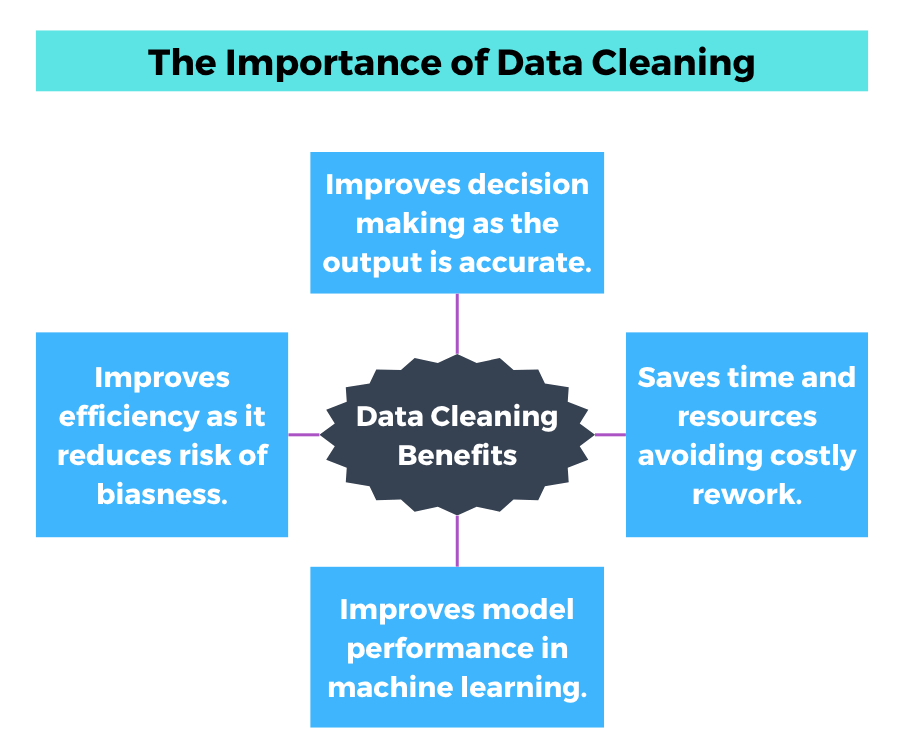
Techniques Used for Data Cleaning in Dissertation Analysis
1. Handling Missing Data
Missing data occurs when there are insufficient data values stored for a particular observation, typically due to incomplete data collection, entry errors, or equipment malfunctions. Missing data in a dissertation can significantly impact the statistical power of the study, resulting in the loss of valuable information and distorting the analysis, ultimately leading to invalid conclusions. To handle missing data before conducting the dissertation analysis, scholars can delete the missing values, impute the absent digits, or utilize regression models to predict and fill in the missing values. Properly handling missing values guarantees the integrity of the dataset, ensuring the results are credible and maintaining the statistical power of the data, leading to accurate findings.
2. Deduplication
Data deduplication is the systematic process of removing redundant copies of data or files to ensure that the analysis reflects unbiased results. The data duplication process typically involves using a tool to evaluate data and identify duplicates, eliminating the flagged values. To identify duplicates, the software package compares distinct identifiers attached to a piece of data, and if a match is discovered, one copy of the data is kept, and duplicates are replaced. Some of the deduplication methods applied before conducting a dissertation analysis include file-level, block-level, variable-length, target, source, in-level, and post-process deduplication. By deduplicating dissertation data, PhD candidates can reduce file size, thereby conducting a faster analysis and drawing more valid conclusions.
3. Dealing with Outliers
An outlier is an observation that differs significantly from the other values in a dataset by being either much smaller or much larger. Scholars conducting a dissertation can identify outliers in their dissertation data using four main steps which include: i). Visual inspection using histograms and scatter plots, ii). sorting, iii). test statistics such as z-score, and iv). applying the interquartile range method. PhD students can deal with outliers in the dissertation data by elimination, transformation, imputation, or segmentation. Dealing with outliers guarantees transparency and replicability in the dissertation analysis process and ensures that the study makes a significant contribution to the area of research founded on accurate data analysis not affected by outliers.
4. Standardization
Standardization is the process of transforming data from multiple sources into a consistent format that can be used for dissertation analysis. Some of the examples of inconsistencies in dissertation data that can be resolved using standardization include units and measurements, abbreviation variations, numeric, and data formats. Before conducting dissertation analysis, standardization is achieved through methods such as categorical consistency, value formatting, and scale adjustment, among others. By standardizing formats and structures, the doctoral candidate ensures uniformity and consistency of their data, making it analysis-ready.
What are the Best Data Cleaning Tools for Dissertation Analysis?
1. R
The process of data cleaning in R typically involves 5 main steps: Step 1 involves importing the dataset into the R programming language to evaluate the unclean data. Step 2 involves checking whether the columns have missing values using the is.na() function to obtain a logical matrix indicating which elements are missing (TRUE) and which are not (FALSE). Step 3 entails handling the missing values through deletion by applying the na.omit() function or applying imputation methods. In step 4, develop a box plot or utilize the Interquartile range method to identify and eliminate outliers in the dissertation data. Step 5 involves visualizing the dataset using head() and boxplot() to confirm that the data is clean and analysis-ready.
2. Python
Python is a general-purpose programming language that has a wide array of libraries and functions for conducting most data-cleaning techniques and preparing dissertation data for analysis. Some Python libraries that can be utilized for data cleaning before analyzing data for a dissertation include Pandas, NumPy, SciPy, Pyjanitor, Dataprep, Great Expectations, dask, and Pandera. With Python, researchers can handle missing values, eliminate outliers, deduplicate data, remove erroneous entries, and address inconsistencies, ensuring that their analysis is based on consistent and reliable data.
When offering help to clean data for a dissertation to our clients, we customize our services to fit their specific goals and objectives. Other software tools we utilize when providing data cleaning services for a dissertation include Excel, SPSS, Tableau, SAS, and STATA.
Step-by-Step Process of Getting Help to Clean Data for a Dissertation
When clients opt to have our skilled analysts help them clean data for a dissertation, they provide us with their research objectives, raw data set, specific instructions, requirements after cleaning, and the timeline for data cleaning. In step 1, we eliminate duplicate values to obtain a unique and complete dataset. Step 2 encompasses handling mistakes in the data, such as formatting differences, variations in spelling, or inaccurate convention formats to ensure that the dissertation data is ready for analysis. Step 3 involves correcting structural errors, including incorrect data types and inconsistent formats, through effective data management. In step 4, handle missing data by applying data input methods to fill in empty cells where needed. After handling all the data cleaning steps, we conduct quality checks to ensure that the data is dissertation analysis-ready.


Why Get Help to Clean Data for a Dissertation from Our Platform?
Our platform features a team of experts, comprising data scientists, analysts, and engineers with over 10 years of experience in providing data cleaning assistance to researchers, doctoral candidates, and business owners. With extensive background experience in dissertation analysis techniques, our experts are the ideal choice for your data cleaning needs.
Our expert consultants are available around the clock to answer any inquiries our clients may have in real-time and cater to local and international doctoral students seeking data cleaning assistance.
Whether you need help with handling inconsistencies in data or reporting the findings, we offer customized services for data cleaning in dissertation analysis.
Our professional consultants provide comprehensive customer support throughout the data cleaning process to ensure that the final results align with our clients’ specific research objectives.
By hiring our professionals to assist with data cleaning for their dissertation, our clients can focus on other aspects of their research, such as interpreting the data analysis findings.
Summary
Doctoral candidates should apply various techniques and tools to clean data, ensuring the dataset is consistent and accurate for analysis. They can also seek expert help to clean data for a dissertation, allowing them to focus on other aspects of their dissertation analysis. Worry no more about flawed and inaccurate data sets by hiring our data cleaning experts. Contact us today to learn how we can assist you.