

Understanding Validity and Reliability in Qualitative Data Analysis
Qualitative research provides insight into human behavior, social processes, and lived experiences. Qualitative data analysis is an effective method of uncovering perceptions, patterns, and meanings that the quantitative approaches may not identify. If you require assistance with qualitative data analysis, our experts provide qualitative data analysis services to support clients in conducting academic, organizational, and independent research. When scholars hire an expert data analyst for qualitative research, they benefit from software expertise, such as MAXQDA, NVivo, and ATLAS.ti, as well as methodological rigor and unbiased interpretation, which significantly enhance the credibility of the results. Additionally, our clients receive tailored help for methodological design, thematic analysis, coding, and reporting. This article contains a discussion of the concepts of validity and reliability in qualitative data analysis and the techniques to improve them.
Validity in Qualitative Research
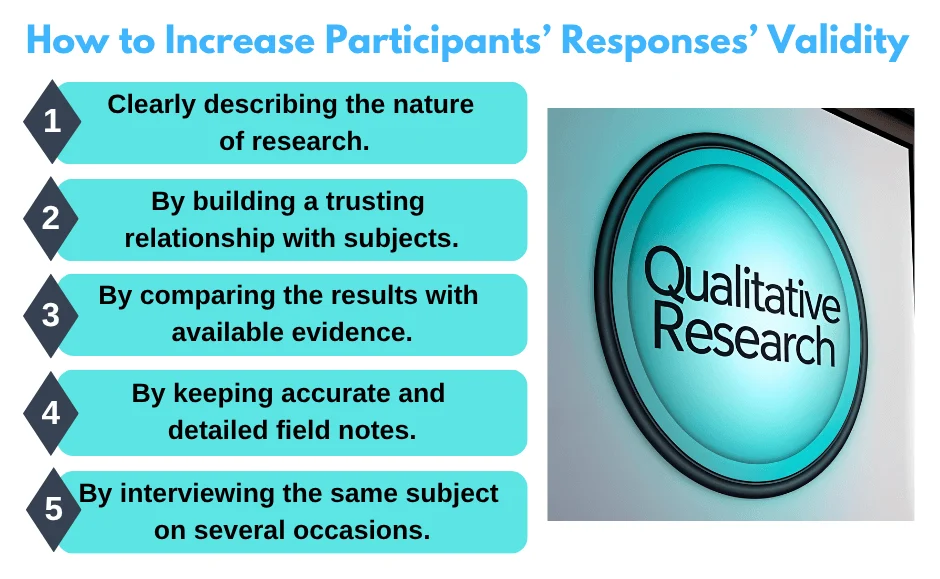
In qualitative research, validity, also known as trustworthiness, evaluates the accuracy of results as representations of participants’ cultures, contexts, lives, and data. Validity is not measured in numbers but evaluated based on interpretations. Validity ensures that the researcher captures only the phenomenon they intend to understand.
Types of Qualitative Research Validity
1. Credibility
Credibility refers to the confidence in the veracity of the results, which is strengthened through extended interaction, triangulation, and participant validation. Credibility is enhanced through strategies such as member checking, prolonged participant engagement, and data triangulation. Researchers use the above strategies to ensure that their findings reflect the perspectives and experiences of the study participants.
2. Transferability
Transferability refers to the extent to which results can be applied in other settings, which is enhanced by providing a thorough description of the context. Scholars strengthen the transferability of their research by providing detailed descriptions of the research participants, findings, and context. The detailed research, including participants, findings, and context reporting, allows other researchers to evaluate whether the findings are relevant to their situations.
3. Authenticity
The focus of authenticity is on the fair and diverse representation of participant perspectives, especially those of underrepresented groups. Authenticity ensures that scholars include and respect diverse perspectives in the research process. Authenticity enhances meaning and depth to qualitative results by highlighting emotional complexity and refinement.
How to Enhance Qualitative Research Validity
1. Triangulation
In qualitative research, scholars utilize the triangulation approach when using multiple techniques to collect individual perspectives. The triangulation approach enables researchers to reveal consistent perspectives across various types of data. Triangulation strengthens the validity and credibility of the results by minimizing potential biases.
2. Member Checking
The member checking process entails returning interpretations or data to study participants for clarification or confirmation. The member-checking technique aims to enhance the rigor, trustworthiness, and quality of research, allowing the participants to verify or clarify interpretations. Member checking enables researchers to represent the views and experiences of study participants accurately.
3. Thick Description
Researchers use thick descriptionsto provide detailed contextual background about study participants, the context, and methods, enabling readers to evaluate the transferability of the findings. Thick description enables readers to understand the environment in which the data were collected. Thick description enables other scholars to judge the potential transferability to diverse contexts.
4. Reflexivity
Reflexivity involves recognizing and addressing individual biases and preconceptions throughout the validity and credibility of the study process. Reflexivity involves researchers’ self-reflection during the process of collecting, analyzing, and interpreting data. Reflexivity improves the integrity and transparency of the study process.
Reliability in Qualitative Research
In qualitative research, reliability focuses on consistency instead of replication. Reliability emphasizes whether the research process is logically coherent, dependable, and well-documented. Reliability establishment helps readers ensure that the results are not random or biased, but rather based on the systematic application of the research process.
How to Improve Qualitative Research Reliability
1. Audit Trail
An audit trail is a comprehensive and systematic record of the study process. An audit trail entails the documentation of analytical steps, data collection techniques, and the coding process. An audit trail enables external reviewers to trace the research’s path and evaluate the confirmability and dependability of the findings.
2. Codebooks
A codebook is a document used by researchers as a roadmap, guiding them through the complex landscape of qualitative insights. Codebooks outline the codes, examples, and definitions that researchers use when analyzing qualitative data. Scholars use codebooks to minimize ambiguity and enhance the transparency and reliability of the coding process.
3. Inter-Coder Agreement
Inter-coder agreement refers to the level of consensus among multiple researchers who independently analyze similar qualitative data. High agreement implies that individual biases do not influence the coding process, making it a reliable method. Inter-coder agreement enhances the dependability and credibility of qualitative findings.
4. Peer Debriefing
In qualitative research, peer debriefing is a practice that scholars use to ensure they receive valuable guidance on all elements of their study. Peer debriefing is a quality control method where scholars engage their colleagues to critique and review their research. The peer debriefing process enables researchers to identify inconsistencies, blind spots, or biases in the studies.
Validity and Reliability Across Different Qualitative Methods
Every qualitative research approach has its trustworthiness considerations:
1. Grounded Theory
The grounded theory method attains validity through theoretical saturation and constant comparative analysis. Comparing ongoing categories and emerging codes enhances reliability by ensuring consistency in the interpretation of results. Also, iterative coding supports rigor and transparency throughout the study process.
2. Phenomenology
Phenomenology necessitates bracketing and deep immersion in lived experience. Deep immersion in data, including repeated reflection and reading, enables researchers to capture the essence of the phenomenon accurately. In phenomenology, scholars use member checking to verify the authenticity of the interpretations with study participants.
3. Case Study
In case studies, researchers improve validity by utilizing multiple sources of evidence, including documents, interviews, and observations. Data source triangulation enhances reliability by corroborating results across multiple types of data. Researchers use detailed procedures and context documentation to allow for replication and ensure transparency.
4. Ethnography
Ethnography entails extensive field notes and lengthy engagement to understand cultural practices. These detailed and extensive field notes allow scholars to capture the complexity and richness of participants’ interactions and behaviors. Participant feedback and peer debriefing are used to minimize researcher bias and strengthen credibility.


Why Hire an Expert Data Analyst for Qualitative Research?
The following are some of the advantages of hiring a qualitative expert:
1. Methodological Alignment
Qualitative experts adjust the analysis method to clients’ research objectives, regardless of whether the approach is grounded theory, case study, or phenomenology. Data analysis experts understand how to align clients’ research questions with accurate qualitative frameworks. Methodological alignment ensures that the analysis is academically sound, focused, and coherent throughout the research.
2. Technical Proficiency
Expert analysts are well-trained in NVivo, ATLAS.ti, and MAXQDA, which are essential for handling extensive data. Expert analysts use advanced features to organize, code, and visualize data. Scholars benefit from experts’ technical skill set and their ability to extract credible and reliable insights from complex datasets when they hire an expert data analyst for qualitative research.
3. Increased validity and reliability
Data analysts use best practices, including member checking, triangulation, and audit trails, to ensure qualitative research meets high standards. Our data analysts help ensure that clients’ findings are reliable and credible across contexts. Member checking, triangulation, and audit trail approaches minimize bias and strengthen the trustworthiness of the findings.
4. Time and efficiency Gains
Seeking qualitative data analysis helps eliminate the hours of learning how to use the software or correcting inconsistencies. Seeking expert help allows one to concentrate on other academic and social activities, while the professionals work on the analysis.
5. Objectivity
Third-party analysts add neutral and unbiased perspectives to the researcher’s data. Third-party analysts’ external positions assist in reducing researcher biases in the interpretation. Objectivity enhances the confirmability and rigor of one’s qualitative research.
Who Should Hire an Expert Data Analyst for Qualitative Research?
- Postgraduate and graduate researchers. PhD and master’s researchers often conduct qualitative research as part of their dissertations and theses. However, scholars face difficulties when coding frameworks, developing themes, and maintaining validity. By seeking help from our professionals, our clients can be assured that their studies are methodologically sound and meet the highest academic standards.
- Academic and university researchers. Faculty members and postdoctoral researchers conducting qualitative studies for publication in a journal must meet rigorous standards of credibility, transferability, and dependability.
- Researchers in health, education, and social sciences. Qualitative approaches are commonly employed by professionals in psychology, public health, sociology, and education to understand systemic problems, behaviors, and experiences. Partnering with an expert data analyst helps ensure that researchers’ results are actionable, valid, and replicable, especially when informing practice or policy.
- Researchers dealing with sensitive or complex data. Research involving culturally sensitive topics, trauma, and marginalized groups requires a greater focus on confirmability and authenticity. Our team provides customized qualitative data analysis to ensure that clients’ findings align with the research objectives and expectations of their respective committees.
- Researchers with limited technical skills or time. When researchers lack adequate time or are unfamiliar with qualitative analysis software such as NVivo or ATLAS.ti.
Summary
Sometimes, it can be challenging for researchers to have consistent documentation, deliberate strategies, and methodological expertise, especially when dealing with complex datasets or under tight deadlines. Choosing to hire an expert data analyst for qualitative research enhances the quality of the study, making it credible, clear, and consistent. Our team helps researchers interpret their data with integrity and present their results confidently. Contact us now for inquiries about qualitative research, and you will receive a prompt response from our competent experts.